
Mountain-top mission to protect one of Australia’s rarest frogs
Terrain NRM
A tiny frog with a big problem has sparked a mountain-top rescue mission in Far North Queensland.
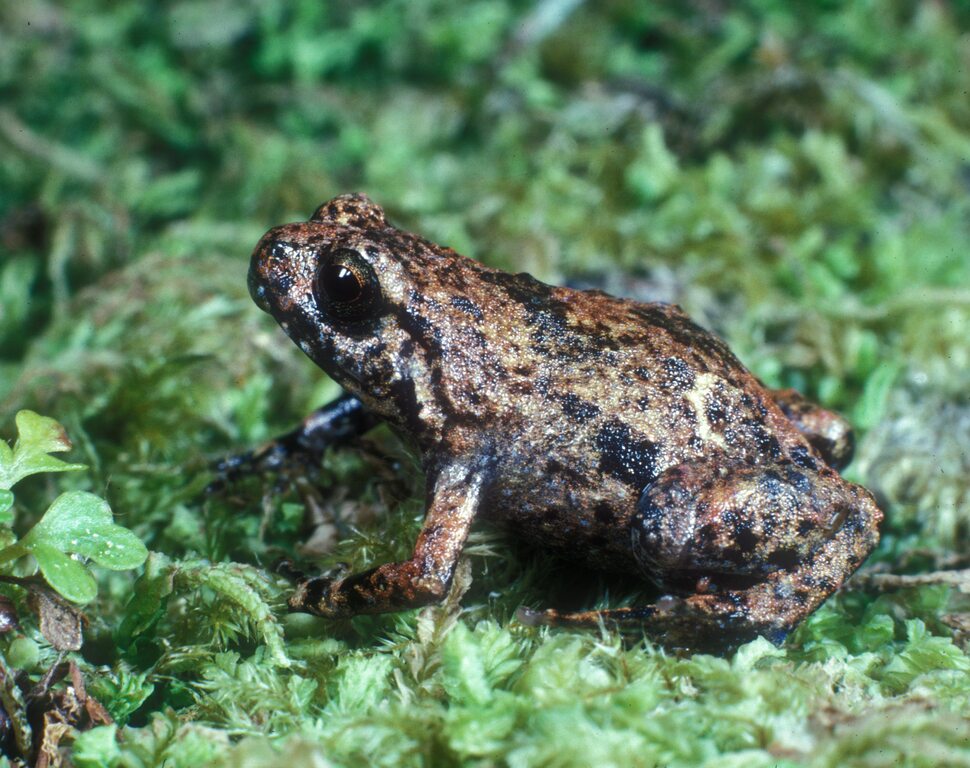
Conservationists are working in dense rainforest near the summit of Mt Lewis, near Julatten, to save the critically endangered mountain-top nursery-frog which is facing two challenges - feral pigs and a changing climate.
The frog is roughly the size of a thumbnail and it lays eggs under leaf litter. It is only found in high-altitude cloud forests in Mt Lewis National Park near Julatten.
Terrain NRM’s Dr Andrew Dennis says feral pig numbers appear to be increasing above 1,100 metres, based on the amount of disturbance being seen.
“Over time they’ve slowly migrated upwards from the low altitude areas of the mountain,’’ he said.
“In mountain-top nursery frog breeding sites up near the top of Mt Lewis, pigs are now digging up the ground and leaving bare soil where there was leaf litter and tree seedlings, and we’ve observed them digging in the roots of the Linospadix apetiolatus palms.
“These tiny frogs breed in leaf litter. The males call from the palms, to project their voices to females. Eggs are laid in the leaf litter on the palm leaves or the ground. Where it’s deep, it also holds a lot of food for them. But with pig disturbances, they are losing both breeding and feeding zones.”
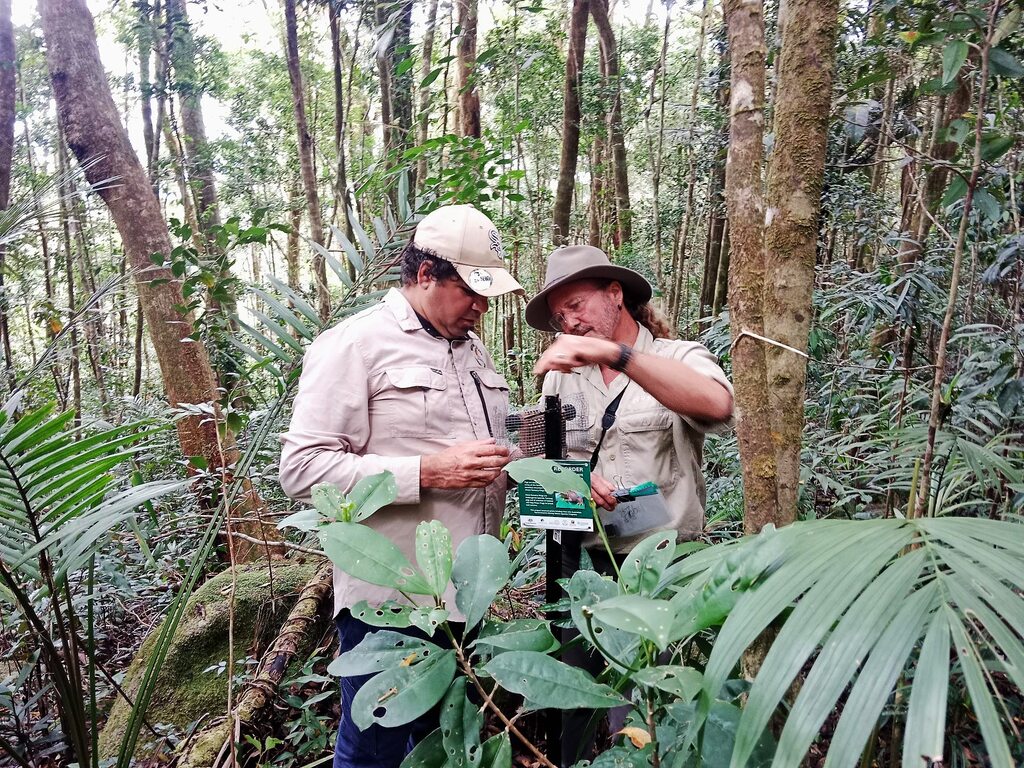
One of the answers is pig exclosure fencing. Terrain NRM has been working with Western Yalanji Traditional Owners and Gulf Savannah NRM to erect fences around 10 breeding sites in dense cloud forest near the top of the mountain. Now they’re also working with the Queensland Parks and Wildlife Service and James Cook University researchers, using frog-call monitors and regular habitat assessments to monitor these sites and rare frogs.
“Breeding season is generally from October-November to March,’’ Dr Dennis said.
“We have 10 fenced sites that exclude pigs and 10 control plots that aren’t fenced and they’re all about 60 metres apart so that calls from frogs at one plot shouldn’t be heard at another.
“We have audio recorders at each site to monitor calling activity and we’re also regularly monitoring the habitat, measuring things like seedling and leaf litter density and any recovery of the Linospadix apetiolatus palms.
“Pigs are churning up significant areas of this fragile habitat. We are measuring this as part of the project. On a wider scale, they’re also a weed and water quality threat to a highly biodiverse area of the Wet Tropics at the headwaters of the Mitchell and Mossman River systems.”
At least five frog species have disappeared from the top of Mt Lewis in the past few decades, with three of them likely extinct worldwide. Dr Dennis said a fungal disease had been the main cause of their demise, but climate changes pose another threat to species at the high altitudes of ranges like Mt Lewis.
“I’ve been visiting this region for well over 50 years. Walking in the cloud forest and around the creeks, it used to be noisy with frog calls day and night. Now it’s noticeably a lot quieter.”
The mountain-top nursery frog’s trill is also diminishing.
“Calls were detected by researchers in 2003 at 1,100 metres. But 20 years later, in 2023, there were no calls at 1,100 metres. They were detected at 1,200 metres and above.
“With global warming and its related effects on weather, these frogs are retreating up the mountain and naturally the area they can occupy is shrinking as they abandon the lower reaches. It’s also shrinking as pigs disturb the habitat. The highest points on the range are just over 1300 metres so there’s not too far left to go.”
Western Yalanji Rangers say they’re seeing the same changes on Country, with pig damage pushing higher into the cloud forest and frog calls becoming harder to hear.
“We’ve walked these mountain ridges for a long time and we can see where pigs are tearing up the leaf litter and the small palms the frogs need,” Western Yalanji Ranger Nathaniel ‘Archie’ Levers said.
“It’s noticeably quieter than it used to be, and the frogs seem to be hanging on higher up the mountain. Working together to fence and monitor these breeding places is about giving the habitat a chance to recover and keeping this little frog here for the future.”
Fresh pig tracks were recently recorded at several of the frog breeding sites, highlighting the urgency of the current recovery work.
“By keeping pigs out of these small patches of habitat, it gives this species a chance to breed and survive,” Dr Dennis said.
“If we consistently record more calling male frogs inside the enclosures, it could pave the way for broader conservation strategies.”
The mountain-top nursery-frog is a priority species in the Australian Government’s Threatened Species Action Plan 2022-2032 and this project received grant funding from the Australian Government’s Saving Native Species Program.