
How to be an investigative journalist
Bryan Littlely Column

“How do you become an investigative journalist?”
It’s a question I’m often asked.
My response is usually the same: every journalist should be investigative in their daily work.
Being investigative doesn’t necessarily mean crime stories or cold cases. It can be as simple as checking Bureau of Meteorology information during cyclone warnings — particularly important in the Douglas region and Far North Queensland.
It’s investigative to question TMR about timelines on Cook Highway works, or ask a ratepayer-funded tourism body exactly how much it spends promoting the region.
It’s investigative to call the medical clinic of a much-loved local doctor when rumours spread around town of their sudden and heartbreaking death.
If you are a journalist, you are investigative by nature.
How you apply that instinct — and what subject matter you apply it to — is what probably determines whether people label you an “investigative journalist”.
For me, much of the past 20 years has been dedicated to cold case crime investigations, particularly the abduction of Joanne Ratcliffe and Kirste Gordon from Adelaide Oval on August 25, 1973.
What began as a journalist writing stories about emerging information has gradually shifted into something deeper — actively investigating the cases and then presenting those findings for wider media coverage and public scrutiny.
Along the way, I invested time getting to know and support the families involved, which ultimately led to helping co-found Leave A Light On Inc to support families of missing persons.
The rise of social media has transformed investigative journalism. It allows information to travel quickly and gives ordinary people the chance to contribute valuable leads.
But it also creates noise.
The funnel becomes flooded with rumours, dead ends, false information and, at times, deliberate misdirection. Sorting through it all and cross-checking facts is probably harder now than it was when many of these crimes originally occurred.
Still, it remains incredibly valuable.
As I write this column, I have three active leads on Adelaide cold case matters — all from people I likely never would have heard from had I not built an online community around citizen investigations.
And if this column feels slightly disjointed at times, that’s probably because my train of thought was interrupted a few paragraphs ago by information about an alleged new victim of convicted pedophile Tony Munro — a man I place very high on the list of people with intimate knowledge of what happened to the Beaumont children on January 26, 1966.
Munro was released on parole in late April, with the remainder of his sentence to be served under home detention in South Australia until December 2029.
When I posted news of his release on social media, the response exceeded 600,000 views and generated more than a dozen potential new victim leads.
That, to me, is investigative journalism in 2026.
The information now flows constantly. Some days I joke that I field more calls and messages than CrimeStoppers.
Investigative journalism can also mean physically searching remote locations for evidence, or launching a podcast designed to encourage witnesses and victims — people who have never spoken publicly before — to finally tell their stories.
Over the past couple of years, I’ve done both.
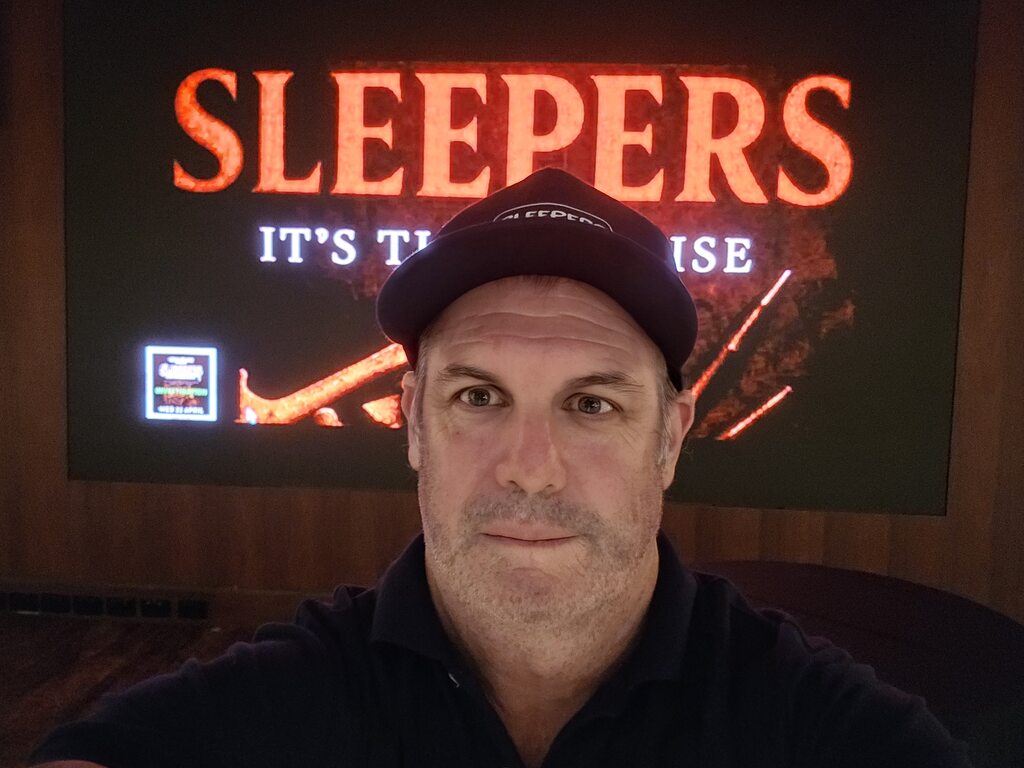
My podcast, SLEEPERS, has now surpassed 100,000 downloads, something I’m proud of as both a journalist and content producer.
But more importantly, it has become an effective investigative tool.
I’m fortunate to work alongside a dedicated team of volunteer researchers who spend countless hours analysing material and uncovering key information. There is also a committed group who physically search sites of interest, often in harsh conditions, looking for the smallest clues.
Those efforts have already produced significant results.
One piece of pelvic bone containing embedded glass held police attention for more than 200 days before eventually being returned with a determination that it was non-human — despite no evidence it had even been formally tested.
Physical evidence isn’t essential to building a case narrative.
But it certainly helps.
In coming days, experts will forensically examine two 44-gallon drums recovered from a concealed tunnel in a remote South Australian reservoir.
The claim is extraordinary: that the drums were used to destroy the bodies of Joanne Ratcliffe, 11, and Kirste Gordon, 4, after their abduction from Adelaide Oval by Stanley Arthur Hart of Yatina.
Was Hart’s grandson, convicted pedophile Mark Trevor Marshall, telling the truth when he gave evidence to Commissioner Ted Mullighan during the inquiry into abuse in South Australian state care?
I intend to find out.
The story of those barrels stretches across half a century — placed in tunnels 50 years ago, reportedly seen by a teenage girl 40 years ago, missed during police searches following a confession 30 years ago, recovered almost 20 years ago, and pushed before investigators repeatedly over the past decade.
We’ll document it, film it, investigate it and share it publicly as it unfolds.
That’s how I view investigative journalism.
Ironically, I had one of Australia’s best-known investigative journalists call me this week to discuss the Adelaide Oval case.
They admitted they knew relatively little about it because it had long been overshadowed by the Beaumont children investigation.
Yet despite that lack of detailed knowledge, they confidently debated suspects and witnesses, seemingly determined to position Townsville man Arthur Stanley Brown — a suspect they had previously written about — as equal to any other potential offender.
That was despite me pointing out that a key witness account linked to Brown had changed dramatically multiple times over four decades.
When I challenged them to produce evidence placing Brown in Adelaide on the day of the abduction — something I have spent 15 years unsuccessfully searching for — the response was:
“Who knows? About the same level of possibility as anyone else. The difference is, I don’t care, whereas you do. It’s tricky getting welded to a theory because if it sinks, you drown with it.”
That’s not investigative journalism.
That’s storytelling.
If I drown, I’ll drown fighting.
#fightlikejo
Bryan Littlely has worked as a journalist and editor for more than 35 years across regional and metropolitan mastheads. He is Newsport Senior Journalist and host of the podcast SLEEPERS – It’s Time To Rise. Bryan will present SLEEPERS LIVE at The Oaks Resort Port Douglas on Wednesday, June 24, with the support of Newsport. Tickets are $30.