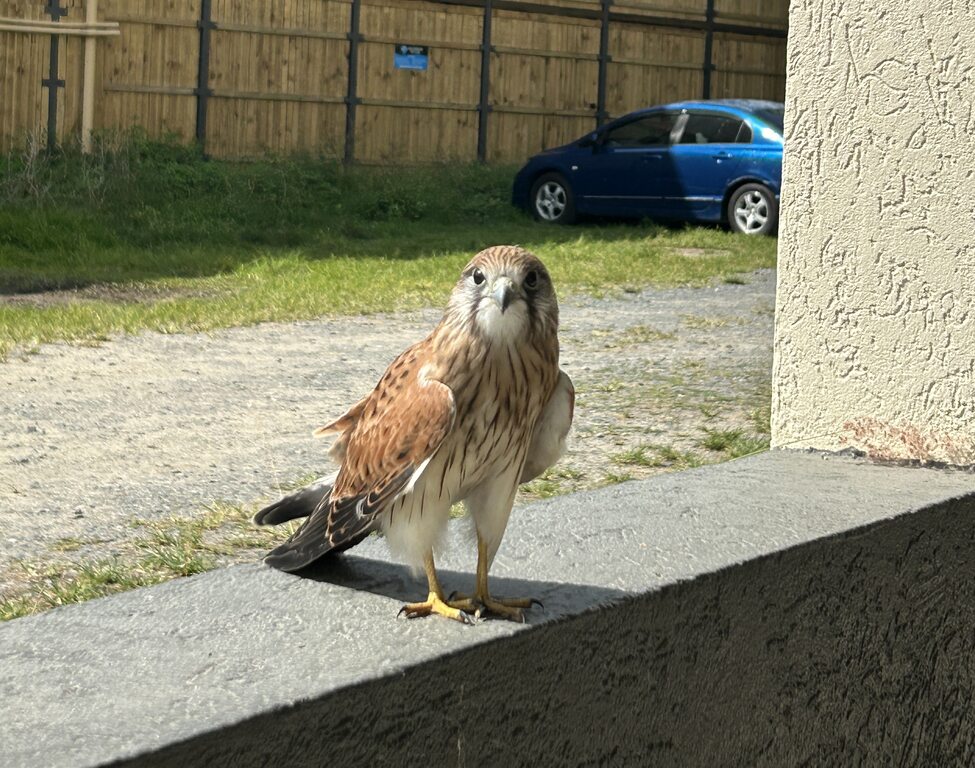
Weakened falcon chick rehabilitated and returned to town nest
LOCAL WILDLIFE

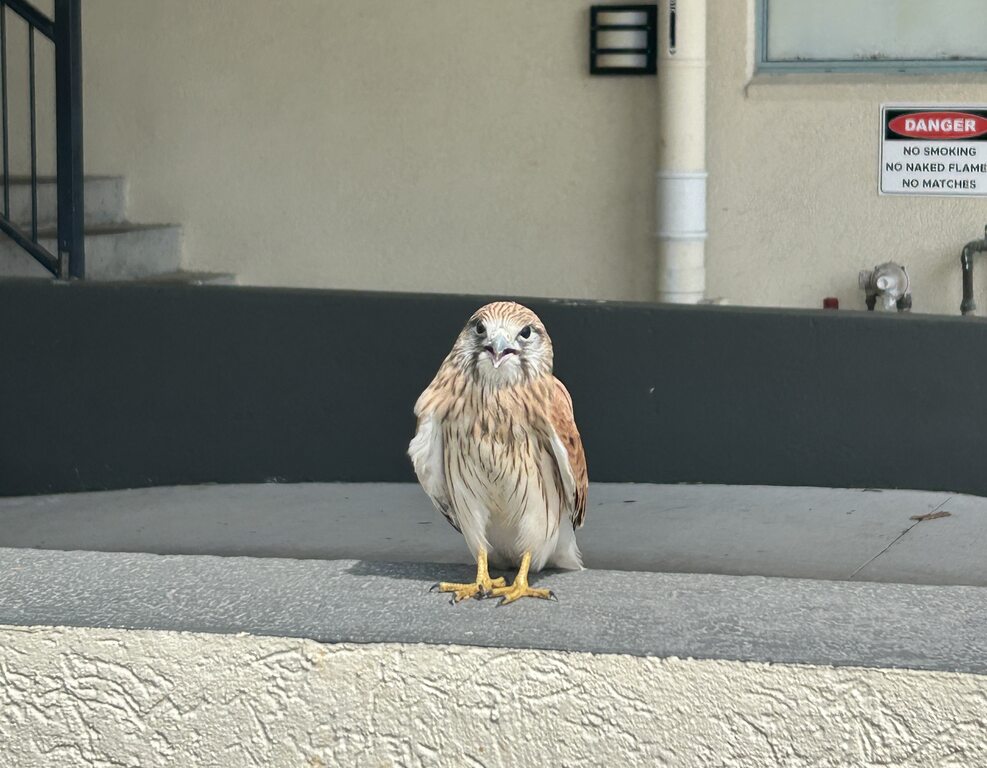
A young Nankeen Kestrel chick - one of Australia’s smallest falcons - is safely back in its nest after being discovered severely malnourished in a Port Douglas resort driveway.
Last Friday, 23 October, I was near the driveway garage at Mantra Heritage on Warner Street when a loud chirping caught my attention.
Sitting right in the middle of the pavement was a small, feathered chick looking up as if asking for help.
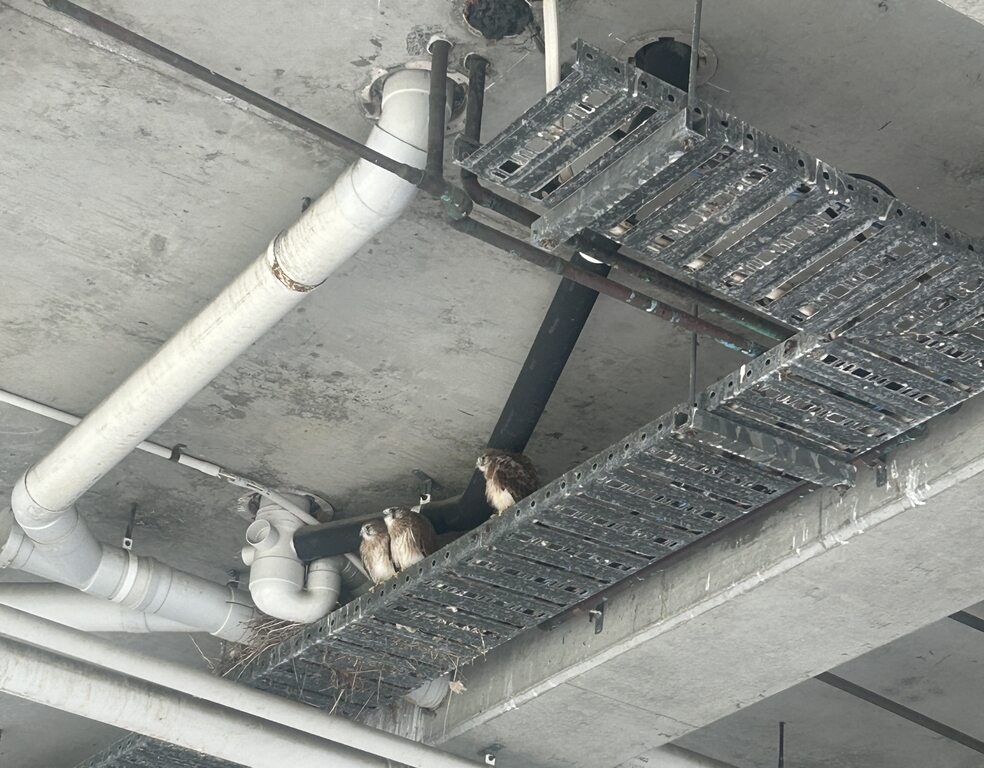
High above, nestled in the building's roof structure, three other chicks were chirping away, but their parents were nowhere in sight.
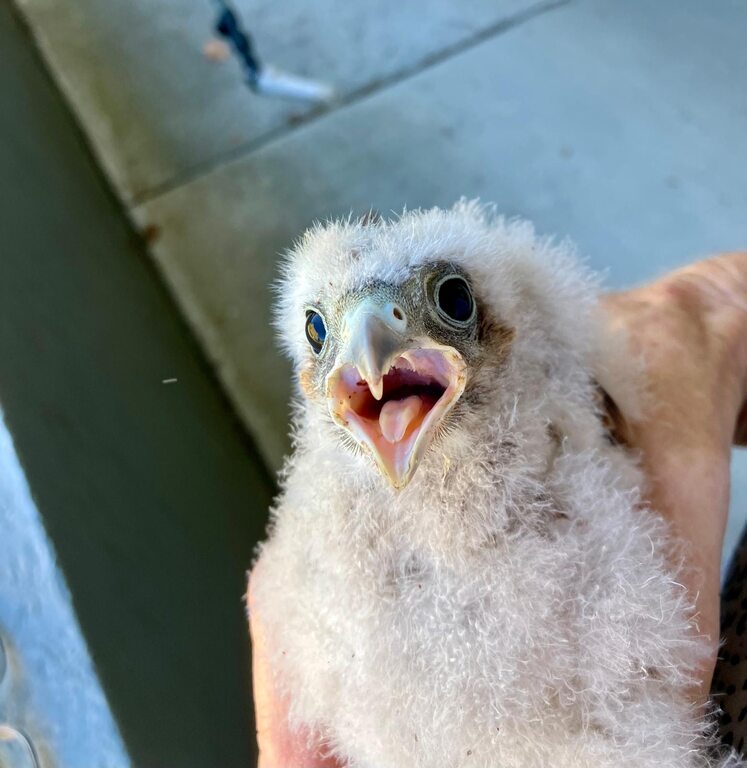
I contacted Raptor-qualified rescuers from Port Douglas Wildlife Rescue (PDWR) and they assessed the weakened chick and took it into care for intensive rehabilitation, administering fluids and high-nutrition food.
This is a common situation for young birds attempting their first flight from the nest.
Although the chick appeared physically uninjured, it was underweight and its exposed position left it vulnerable.
The young bird had gone without food for roughly three days and was far too weak to fly back up to its nestmates.
“The bird looks lovely and fluffy at first instance until you assess it, and that's when you feel how thin it is,“ PDWR explained.
After three days, once the bird had regained its weight and strength, it was returned to its Warner Street nest.
The mother kestrel soon returned to the site, where she has since been spotted supervising the brood and teaching her fledglings how to hunt.
The management team at Mantra Heritage had already been keeping a close eye on the family and was in regular contact with PDWR regarding the young raptors.
In fact, on 7 October, rescuers were called to the resort to assist one of the chicks.
PDWR took the fledgling into care before returning to the site, using a long pole to elevate the bird back up to its unreachable nest ledge, a crucial intervention that saved its life, though rescuers note it is impossible to tell if this was the same chick.
Nankeen Kestrels feed primarily on insects, small rodents, and reptiles. Rather than building traditional twig nests, they often adapt to urban environments by choosing high roof alcoves or building ledges that mimic natural cliff faces.
Kestrel chicks typically fledge, taking their first flights, at around 28 to 35 days old. However, gaining the strength needed for lift-off requires constant nourishment from their parents during these final weeks.