Saving the Reef is in a Queenslander's DNA
GBR history



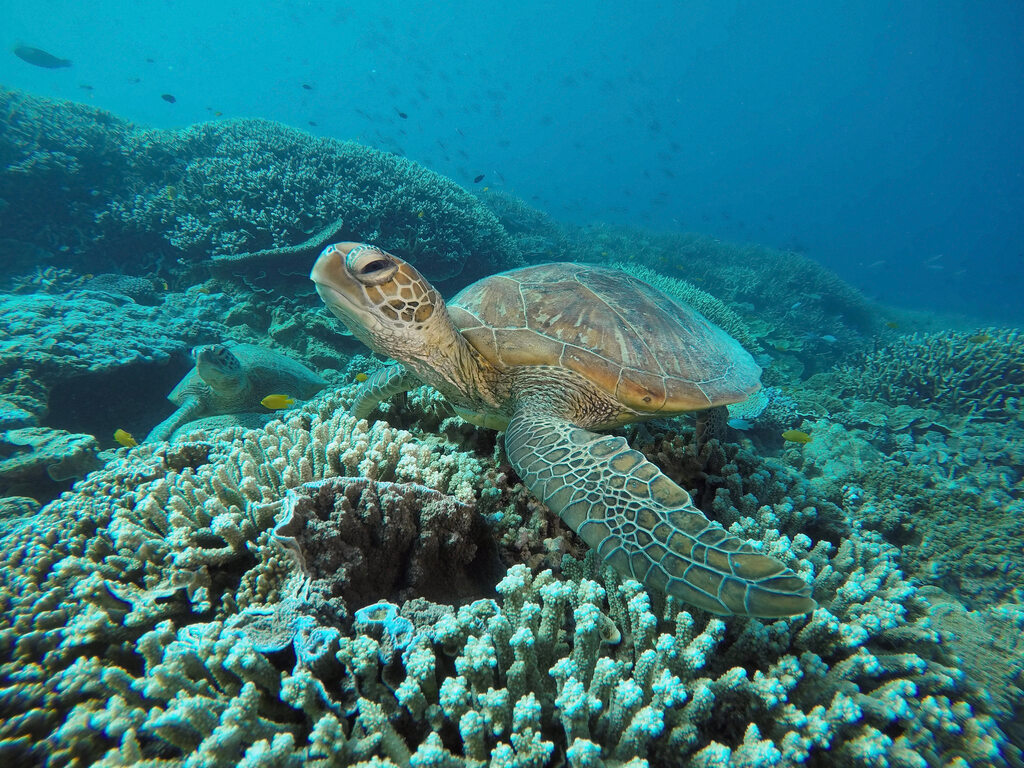
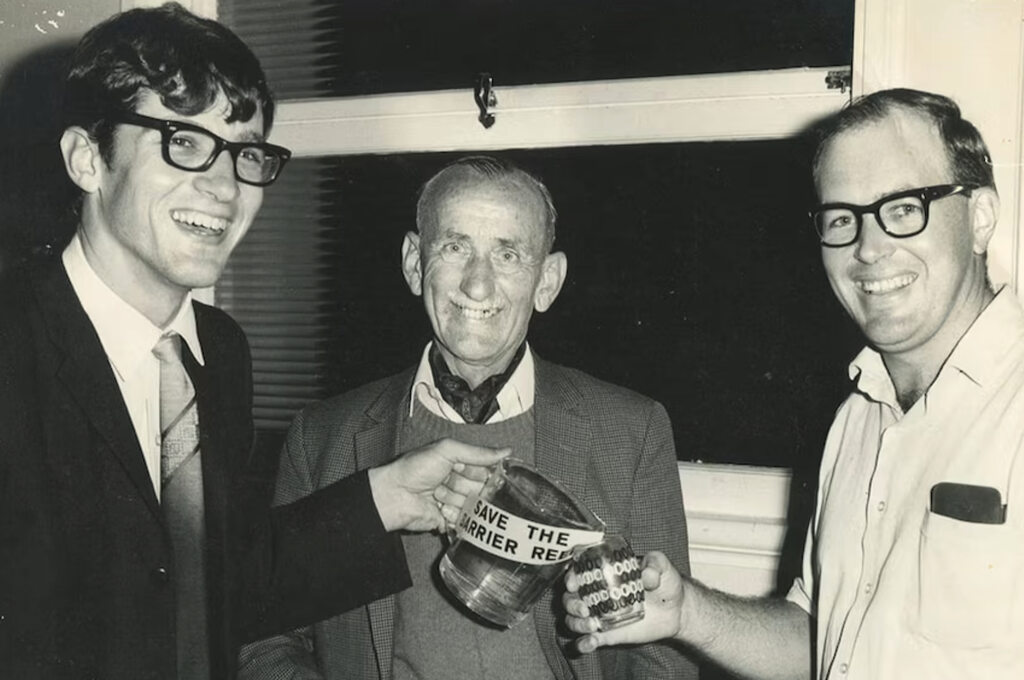
Australia’s greatest natural asset, the Great Barrier Reef, could have been reduced to an oilfield and limestone quarry without the hard-won protections that Queenslanders fought for.
That’s why anyone calling to weaken World Heritage obligations or slash Australia’s environmental laws must first understand why those protections exist.
In the late 1960s, the State Government leased more than 200,000sq km of the Reef to companies intending to search for and extract oil.
Queensland Premier Joh Bjelke-Peterson had shares in mining companies with leases over the Reef, and was determined for oil drilling to proceed.
Exploration permits stretched along much of the Reef’s length.
Companies including Shell and Ampol conducted seismic and magnetic surveys, and exploratory wells were drilled in several locations.
At the time, there was virtually nothing protecting the Reef.
There was no World Heritage listing, no Great Barrier Reef Marine Park, and no Australian Institute of Marine Science.
Guano miners had already stripped numerous islands, while coral miners had used explosives and pickaxes to quarry coral for cement and fertiliser.
Some proponents argued sections of the Reef should be obliterated because they obstructed surf breaks.
Others claimed the Reef was suffering from a plague of corals which ought to be culled.
The prevailing attitude was that the Reef was a mining resource whose only value was exploitation for economic development - not a world wonder whose value lay in maintaining its biodiversity.
Had events unfolded differently, large sections of the GBR could today resemble an industrial oil province and limestone quarry, rather than one of the world’s greatest natural attractions.
Fortunately, a small group of determined Australians refused to accept that future.
Led by Mission Beach artist John Busst, Nobel Prize nominee and poet Judith Wright, and members of the Australian Marine Conservation Society, volunteers launched one of Australia’s earliest grassroots environmental campaigns.
They sold pot plants and bumper stickers to fund trips around the country, giving talks, writing letters and building public support for protecting the Reef.
Their efforts struck a chord. Hundreds of thousands of Australians rallied behind the cause.
The famous “Save the Reef” bumper sticker became a national symbol of a growing movement that believed some places were simply too valuable to risk.
The campaign delivered results in 1967 when the mining warden rejected an application by the Cairns Canegrowers Executive to mine limestone from Ellison Reef near Mission Beach.
A further turning point came in 1970 when Queensland trade unions imposed a black ban on oil-drilling projects, refusing to provide labour, goods or services.
The Federal Government subsequently established a Royal Commission to examine the risks that oil development posed to the Reef.
After hearing evidence from scientists, conservationists, industry representatives and government officials, the commission concluded that oil drilling presented unacceptable risks and should not proceed.
It also recommended stronger protections for the Reef, helping pave the way for the creation of the Great Barrier Reef Marine Park, the Australian Institute of Marine Science, and ultimately World Heritage listing in 1981.
Today, the GBR supports about 77,000 jobs and contributes $9 billion annually to the Australian economy through tourism, fishing and related industries.
The economic benefits that our fishing and tour operators enjoy today exist because previous generations chose long-term protection over short-term exploitation.
Our generation faces the same choice.
The lesson of the Reef’s history is not that governments should never approve development. It is that no single government, industry or interest group should have sole authority over places of national and international significance.
Federal environmental laws and World Heritage obligations exist as safeguards.
They ensure that major projects are assessed against minimum environmental standards before proceeding.
They provide accountability, independent scrutiny and a check against short-term political pressures.
A healthy and protected GBR is not an economic obstacle. It is one of Queensland’s greatest economic assets.
Without the protections secured by earlier generations, there is every chance the Reef that millions of visitors travel to see today would have been transformed into an industrial landscape decades ago.
That’s not “green tape”. That’s good governance.
Tanya Murphy is a dive instructor, radio-show host and member of the Australian Marine Conservation Society.