Do you know what we can do with Mossman Mill? This man does
Shire industry
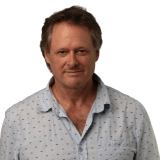


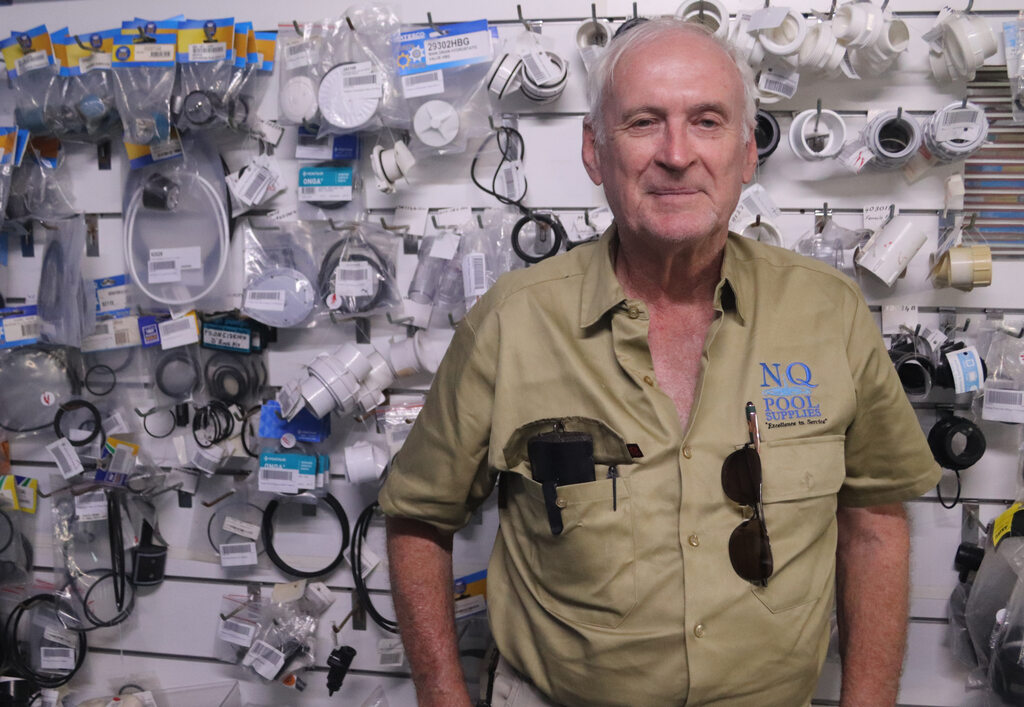
One Far North Queensland local has come up with a solution to Mossman’s agricultural and employment woes after doing the research and working out the sums - build a biofuel plant at the old mill site.
Former farmer and now Smithfield pool-business owner Phil Carlon has been involved in the biodigestion industry for close to 20 years, attending conferences across the country and consulting on various technologies increasingly being used to produce airplane fuel, fertiliser, gas and diesel.
The principle behind the technology is that the Mossman Mill plant would take suitable crops from surrounding farms, which may include sugar cane, sweet sorghum, napier grass and others, put them through a biodigester, have it mixed with other fuel, and sell the product for a profit.
“The biodigester can be whatever size that district can handle to produce your methanol and ethanol,” Mr Carlon said.
“The farmers just keep doing what they’re doing - they’re turning sunlight into energy.”
Mr Carlon said he has had informal talks with officials at Cairns Airport who are in need of aircraft fuel - they currently truck it in from Townsville.
“We’ve just got to convert that energy back out so that the aircraft can use it.”
He has a group of businesspeople backing his plan, but it would cost at least $5m to set up the project at Mossman Mill, so he needs more investment from governments and business.
“Mossman has an opportunity to reinvent itself as a renewable fuels and circular economy hub, building on its industrial heritage rather than leaving it behind,” his group told Newsport last week.
“The closure of the mill was a significant loss to the community, but the infrastructure, location, workforce capability and agricultural history remain valuable assets.”
Mossman has an existing industrial footprint, established transport links, a strong agricultural history, access to biomass crops, a power grid, and a community looking for long-term economic opportunities, according to the group.
“It keeps the town buzzing, also we’re gonna need biochemists, chemical engineers, structural engineers, we’re gonna need a lot of those people, and that’s where the town can really come to the fore,” Mr Carlon said.
“And the pub’s not far away, it’s a good place for lunch.”
A decade ago, many of these technologies were still emerging, but today there are commercially operating technologies capable of producing diesel, Sustainable Aviation Fuel, renewable electricity, gas, carbon products and biochar.
The recent fuel crisis has made such a plant even more viable, Mr Carlon said.
“Australia currently imports the majority of its liquid fuels,” he said.
“Both State and Federal Governments are increasingly focused on fuel security and domestic fuel production.
“There is genuine interest from groups that understand renewable fuels and international energy markets.
“The question is not whether demand exists.
The question is whether regional Australia positions itself to participate in that demand.”
Mr Carlon said the State Government could help out by supporting feasibility studies, site assessments and project development.
Queensland has an opportunity to position regional communities like Mossman as leaders in renewable fuels, regional manufacturing and circular economy industries, he said.
“The future of Mossman does not have to be defined by what was lost when the mill closed.
“It can be defined by what comes next.”
Grower Kalfresh in February was given $80m from the Queensland Investment Corporation and Wollemi Capital to build a digester to convert farm waste into renewable natural gas, electricity and sustainable fertiliser in Southern Queensland.
“I must be a glass half full person, not a glass half empty,” Mr Carlon said.
“Yes, there are some risks, but nothing that we can’t do with some smart engineering.”