LifeFlight's guide to storm safety
Be Prepared


As another severe weather season approaches, LifeFlight rescue crews are urging communities to prepare early, drawing on lessons learned from their emergency responses to floods, natural disasters and severe storms across the country.
LifeFlight's aeromedical teams witness first-hand the consequences of leaving preparations too late and tips provided by LifeFlight’s rescue experts reveal that storm readiness goes beyond basic emergency measures.
Effective preparedness relies on practical, actionable strategies covering every aspect of a property, from securing windows and packing domestic pet go-bags to clearing farm drainage channels and mapping high-ground stock paddocks.
Key Areas of Storm Readiness
Protect your home, livestock, and community by taking these critical safety precautions before severe weather hits:
1. Emergency and First Aid Preparedness: Weather can isolate communities and delay access to emergency services, making basic first aid knowledge an important part of any storm readiness plan. Households should ensure at least one family member has first aid training, keep a well-stocked first aid kit in an easily accessible location, and understand how to manage common emergencies such as bleeding, fractures and shock while waiting for help to arrive. It's also important to save emergency contact numbers and local evacuation information on mobile devices so critical information can be accessed quickly when conditions deteriorate.
2. Household & Property Preparation: Structural readiness is the first line of defence against severe weather. Clearing roof gutters, securing loose outdoor items, and fitting storm shutters or temporary plywood covers over large windows significantly reduce structural damage. Every home should maintain an easily accessible emergency kit equipped with a battery-powered radio, fresh batteries, torch, first-aid supplies, non-perishable food, and clean drinking water for at least three days.
3. Pet & Domestic Animal Safety: Domestic animals are highly vulnerable during severe weather events. Ensuring all dogs, cats, and small pets are microchipped with up-to-date registry details is essential for reunification if animals are separated. Preparing a dedicated pet emergency kit, complete with leads, travel crates, food, water, and medical records, allows for rapid evacuation when emergency warnings are issued.
4. Farm & Livestock Management: Rural properties require specialised planning to protect stock and agricultural infrastructure. Mapping out designated high-ground paddocks clear of flood channels and major power lines ensures stock can be relocated before waters rise. Securing heavy machinery, fuel bowsers, and agricultural chemicals above historical flood levels prevents environmental contamination and severe property loss.
5. Regional Readiness & Communication: In regional and rural areas, long transit distances mean local self-reliance is vital. Clearing boundary firebreaks, maintaining clear access roads, and having backup power generation for water pumps enable regional property owners to manage isolated conditions until emergency crews can arrive.
Georgia Devjak, LifeFlight’s Acting General Manager of Operations, said LifeFlight crews regularly see firsthand the impact of severe weather and the importance of acting quickly:
"From our Operations Centre, we monitor weather conditions around the clock and understand just how quickly severe weather can impact communities. We see the full extent of Mother Nature's power across Queensland, and our teams know that conditions can change rapidly. Staying informed and acting on weather warnings early can make a significant difference when severe weather threatens,” Ms Devjak said.
“Our rescue and aeromedical crews often witness the aftermath of severe weather firsthand
“Through responding to emergencies and transporting patients, they see how quickly communities can become isolated and access to critical services and healthcare can be disrupted.
Those experiences reinforce the importance of being prepared before severe weather arrives."
Action Checklist: Pre-Storm Preparation Tasks
Emergency and First Aid Preparedness
- Ensure at least one person in the household has basic first aid training.
- Keep a stocked first aid kit in an easily accessible location.
- Know how to manage bleeding, fractures and shock while waiting for emergency services.
- Save emergency numbers and local evacuation information on mobile devices.
House & Property Maintenance
- Clear roof gutters, downpipes, and yard drains to prevent water blockages.
- Anchor or move outdoor items inside (furniture, potted plants, trampolines).
- Inspect roof tiles, sheeting, and window seals for damage.
- Assemble a 72-hour emergency kit (battery radio, torch, first-aid kit, non-perishable food, water).
Pet Emergency Plan
- Check that pet microchip records and ID collar tags are up to date.
- Pack a pet go-bag (7 days of food, clean water, medications, bowls).
- Prepare travel crates, carriers, harnesses, and leads.
- Designate an internal, windowless room where pets can shelter safely.
Farm & Rural Infrastructure
- Map out elevated paddocks away from flood zones and power lines.
- Inspect boundary fences and clear debris from access tracks.
- Move machinery, fuel bowsers, and farm chemicals to high ground.
- Test backup generators for water pumps and essential equipment.
How to Act During an Emergency
- When Warnings Are Issued: Bring domestic pets indoors immediately, park vehicles under cover away from trees, and monitor local emergency radio broadcasts for official updates.
- Managing Livestock: Open internal gates early to allow stock unhindered access to elevated ground. Never lock animals in enclosed sheds or low-lying paddocks where rising waters can trap them.
- Sheltering In-Place: Move to the safest internal room in the home (such as an internal hallway or bathroom) away from exterior glass. Keep emergency lighting and radio equipment close at hand.
- Evacuation Protocol: If emergency authorities issue an evacuation order, leave early. Never attempt to drive, ride, or walk through floodwaters—if it's flooded, forget it.
When the Unexpected Happens: LifeFlight’s Lifesaving Aerial & Pet Rescues
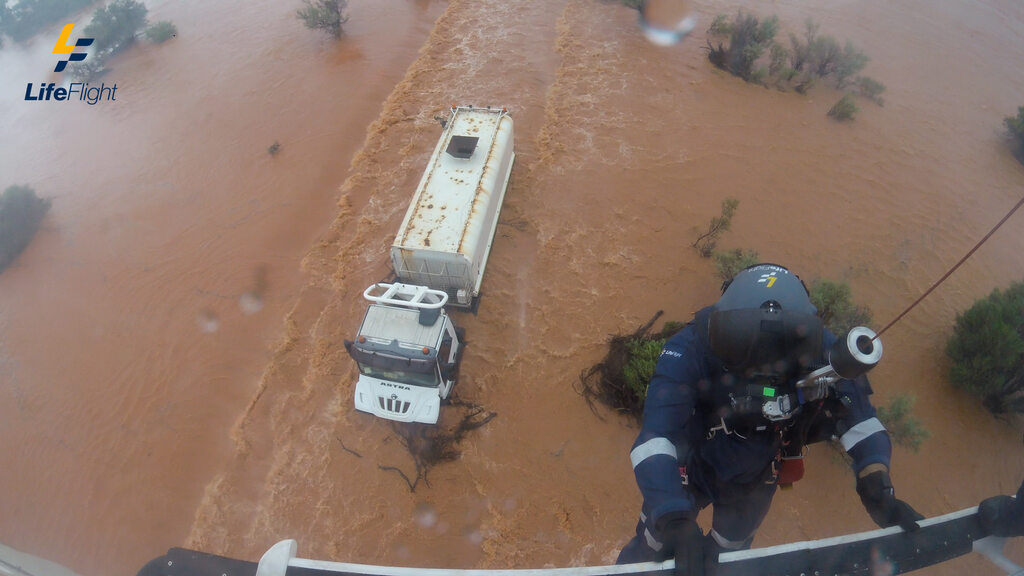
While proactive preparation is your best line of defence, severe weather can still create life-threatening emergencies where rising floodwaters or storm damage cut off ground access, prompting LifeFlight’s 24/7 aeromedical crews to perform helicopter winches across Australia.
Recognising that families faced the heartbreaking choice of leaving pets behind, LifeFlight engineered an Australian-first Animal Rescue Capsule (ARC): a custom, ventilated mesh winch pod with built-in drainage that safely hoists domestic animals up to 50kg alongside their owners, keeping both evacuees and flight crews much safer during critical flood extractions.
Every ticket purchased through LifeFlight Lotteries directly funds the rescue helicopters, specialist medical crews, and innovative equipment, like the Animal Rescue Capsule, needed to deliver critical care and perform lifesaving winches when catastrophic storms strike Queensland.