Environment laws are in the balance
CRISPIN HULL COLUMN



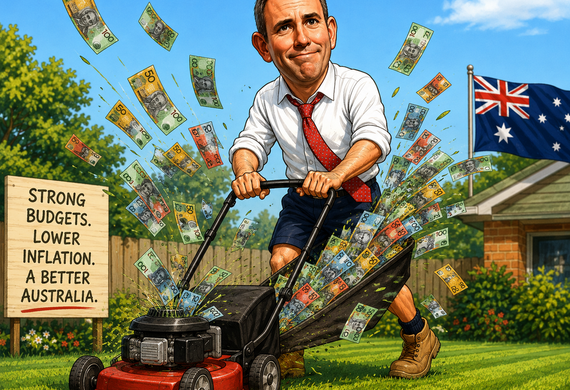
This week the Government aims to get its new environment laws passed. But it does not have a majority in the Senate. The Greens or the Coalition could block the changes – for different reasons.
The Greens say the changes do not go far enough to protect the environment. The Coalition says they go too far. It could result in nothing happening at all.
It is reminiscent of the Rudd Labor Government failing to get its carbon-reduction scheme through the Senate 15 years ago when the Greens’ pursuit of what they thought was perfect defeated what was a good proposal.
Then Treasurer Wayne Swan revealed later that at the time he thought Prime Minister Kevin Rudd would call a double dissolution to ensure Australia would do its bit to deal with “the great moral challenge of our generation”. But he squibbed it.
If the environment legislation goes down, Prime Minister Anthony Albanese won’t take it a double dissolution because he has too much to lose – a 94-56 majority in the House of Representatives.
Besides, Albanese’s natural caution would also militate against it. Also, a double dissolution is a big sledgehammer to get just one piece of legislation through.
Labor is fortunate in that it only needs one or other of the Greens or the Coalition to get legislation through and does not need any independents or minor-party support.
At present it is negotiating, but and negotiations with both could fall through. A more certain way would be to be a bit more Machiavellian.
It should say to the Coalition: “We want some significant changes to the environment law, but the Greens want it to be even greener and unless they get their way you are going to side with the Greens to defeat the legislation because you say it is not business-friendly enough.
“So, we are going to accept all of the Green amendments so the new law will be passed and will come into force on, say, the end of the next sitting.
“Then just before that law comes in to force, we will bring some amendments to it. The amendments will make it less green and more pro-business – more or less back to the legislation that we are now proposing. The Coalition will have a choice: accept the Labor amendments which your mates in business would like or side with the Greens to reject the legislation and be responsible for upholding the very green legislation which you most certainly do not want.”
Or Labor could do it the other way around: agree to the Coalition amendments so the law is passed and then later propose amendments to make it a bit greener which the Greens would support.
That is what Kevin Rudd should have done in December 2009 – and the 15 subsequent years of climate wars would have been avoided.
It is no good denouncing the Senate as “unrepresentative swill” as then Prime Minister Paul Keating did in 1992.
In fact, the Senate reflects the Australia electorate much more accurately than the House of Representatives, even if the smaller states get more senators per head than the larger states.
In 2025, the electorate split three ways: Labor got 34.6 per cent of the vote, giving it 40.0 per cent of the Senate seats and a whoppingly out of proportion 62.7 per cent of the House seats. The Coalition got 31.8 per cent of the vote, 32.5 per cent of the Senate seats and 28.7 of the House seats. Others got 33.6 per cent of the vote, 27.5 per cent of the Senate seats, and an unfairly low 8.7 per cent of the House seats.
If anything, the “unrepresentative swill” is the excessive number of Labor members in the House.
The figures show the fragility of that huge majority. Labor got just 2.8 per centage points more of the primary vote than the Coalition, yet it got more than double the number of seats than the Coalition.
The point is that a similar small swing back the other way could also result in a massive change in seat numbers.
That is presuming, of course, that the Liberal Party can stop changing or threatening to change conductors at state and federal level when the trouble is that the whole string section of the orchestra is playing out of tune and from a different music sheet.
Even so, the Coalition has now moved on to immigration. Here, Labor is vulnerable as evidenced by the rise in support for One Nation to 14 per cent – its highest for 27 years.
Hitherto, the Coalition and Labor have just ignored growing disquiet about high immigration. Labor and the Greens are scared of being branded racist if they advocate lower immigration and the Coalition, until now, was happy to feed its business mates cheap labour.
This is changing. The Coalition (and One Nation) are happy to attract racist voters whose support for lower immigration is best based described by WA Liberal MP Andrew Hastie’s statement that, "we're starting to feel like strangers in our own home" due to what he called "unsustainable" immigration.
The problem for Labor is that even though he is wrong on the former, he right on the latter.
As One Nation leader Pauline Hanson asked last week, why would a government (with a mandate of just 34.6 per cent) have a high immigration policy when it cannot affordably house or give prompt medical attention to the people already here?
She said it was because the Government wanted a good overall GDP figure. She has tapped into voters’ feeling they are hand-done-by. And they are hard-done-by, not just on housing and health, but more generally.
High immigration has boosted overall GDP, but GDP per person (a more relevant figure) has fallen for six consecutive quarters and seven times in the eight quarters leading up to June 2025, according to the International Monetary Fund. High immigration to boost overall GDP is a foolish policy in an economy where the average person is going backwards.
As things stand in the Senate, Labor might well be able to play the Greens and Coalition off against each other, but unless it heads off One Nation’s rise before the election, it will have an even more difficult Senate after the next election, if it wins it.
The way to do that is to acknowledge present immigration rates are putting too much economic and environmental stress on Australia.
It should proudly state that Australia’s immigration policy is not race-based, so whether the number goes up or down, it has nothing to do with race – just economics, the environment, and infrastructure, all of which are dear in the voter heartland.
This article first appeared in The Canberra Times and other Australian media on 25 November 2025.
*Crispin Hull is a distinguished journalist and former Editor of the Canberra Times. In semi-retirement, he and his wife live in Port Douglas, and he contributes his weekly column to Newsport pro bono.
- The opinions and views in this column are those of the author and author only and do not reflect the Newsport editor or staff.
Support public interest journalism
Help us to continue covering local stories that matter. Please consider supporting below.