Diversity is the key
Mike Berwick Column



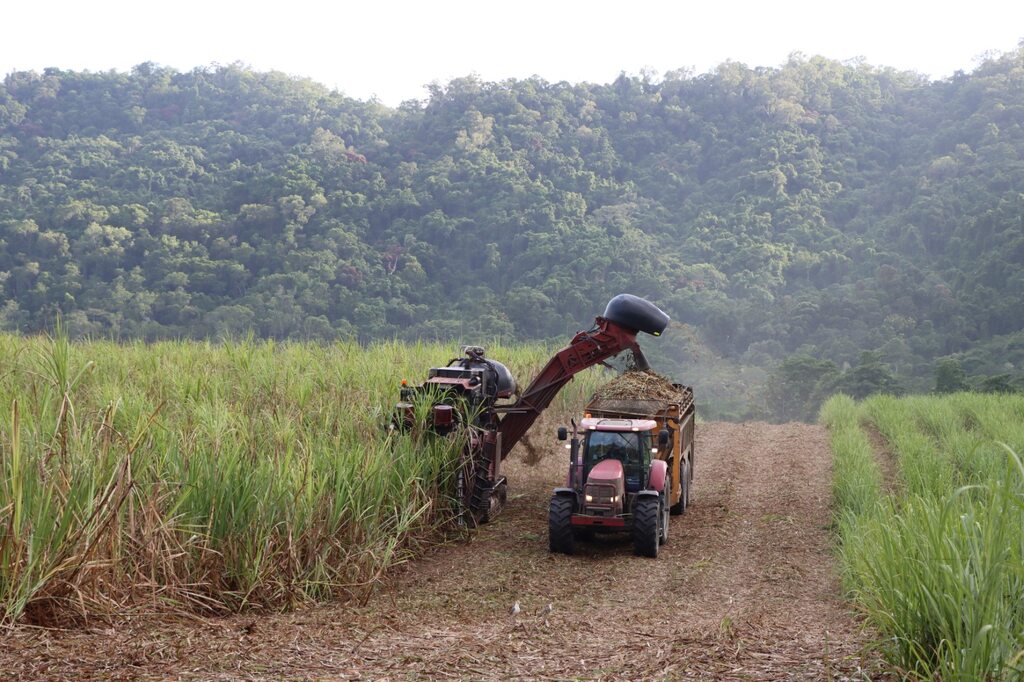
Douglas can and should rebuild its agriculture sector as a critical part of the economy but with hopes fading for a silver bullet to replace cane, effort might better focus on a diversified industry rather than another broadacre monoculture.
There are multiple small crops and tropical fruit orchards already earning good money for the farmers that have been doing it for years – think taro, mangosteen, durian, breadfruit, passionfruit, rambutan, lychee, banana, ginger, papaya,aquaculture and many other possibilities, maybe 40 or 50.
These are mostly high value crops that earn much more per hectare than cane ever did but are hard work and take time and money to establish. It is a long-term agenda using relatively small amounts of land.
A diversified industry like this would be a boon to tourism, likely to remain the economic mainstay, producing local food that visitors love and a great opportunity for farm tourism, local value adds and food for us locals.
So, what to do with the balance of rural land should there be a transition to small area, high value crops using a small part of existing rural landscape? That could be a mix of permanent plantations for carbon, biodiversity, timber, cattle or whatever the landholder chooses.
Retaining rural land for agriculture is important – we do not have the water supply or highway access for a much bigger population and the appeal of this shire - its well-defined urban footprint and stunning rural landscape with forested hills and mountain backdrop are foundational for local amenity and visitor appeal.
Carbon and biodiversity farming should be treated like any other agricultural commodity - produced on farm and sold into a market. They produce a reliable, long-term, modest income.
I estimate at least 50% of land in Douglas, currently designated as “Good Quality Agricultural Land (GQAL)” is heavily constrained – it floods, is waterlogged, steep, has sandy soils, is riparian or will go saline with sea-level rise.
An urgent task is a more useful definition of GQAL by the state and mapped in the regional plan for guidance to land use planners, councils and investors.
Carbon farming is an essential component of Australia’s bipartisan decarbonisation and nature conservation agendas – the Australian Bureau of Agricultural and Resource Economics and Science (Dec 2025 report) say 18 million hectares of carbon farming is needed to meet Australia’s 2050 climate targets and predict this will be a net benefit to the agricultural sector.
Carbon, biodiversity and high value timber are likely the “highest and best use” for the shire’s “constrained” land while the best well drained, flood free, fertile soils that retain their nutrients are better used for cropping and tree fruits.
We need to protect agricultural land but not tell farmers what they can or cannot grow, it will be an economic decision for them.
--
Mike Berwick AM is Senior Advisor to GreenCollar, an environmental market developer and investor, a profit-for-purpose company that partners with landholders to generate carbon. nature, water quality and plastic reduction credits, covering about 10 million hectares. Mike was Mayor of the Douglas Shire from 1991 until 2008. He was awarded the Order of Australia for initiatives to conserve the Daintree and North Queensland rainforest, for his contribution to local government and to the community of the Douglas Shire. He has been chair of, or director on, a number of local, state and national boards, committees and scientific advisory bodies related to agriculture, land use and the environment. Mike has a degree in veterinary science, is an Honorary Fellow of the Planning Institute of Australia and spent 15 years farming barramundi, purple mangosteen and taro.
Mike writes this column as a local resident. GreenCollar has no projects in Douglas.