Political floundering after Bondi leaves door ajar for minor parties
Hull column



When asked what he feared most politically, Conservative British Prime Minister (1957-63) Harold Macmillan is reputed to have said, “Events, dear boy, events.”
Well, Prime Minister Anthony Albanese has a lot to fear over the political ramifications of Bondi.
Another Conservative British Prime Minister, Winston Churchill, is reputed to have said, “Never let a good crisis go to waste.”
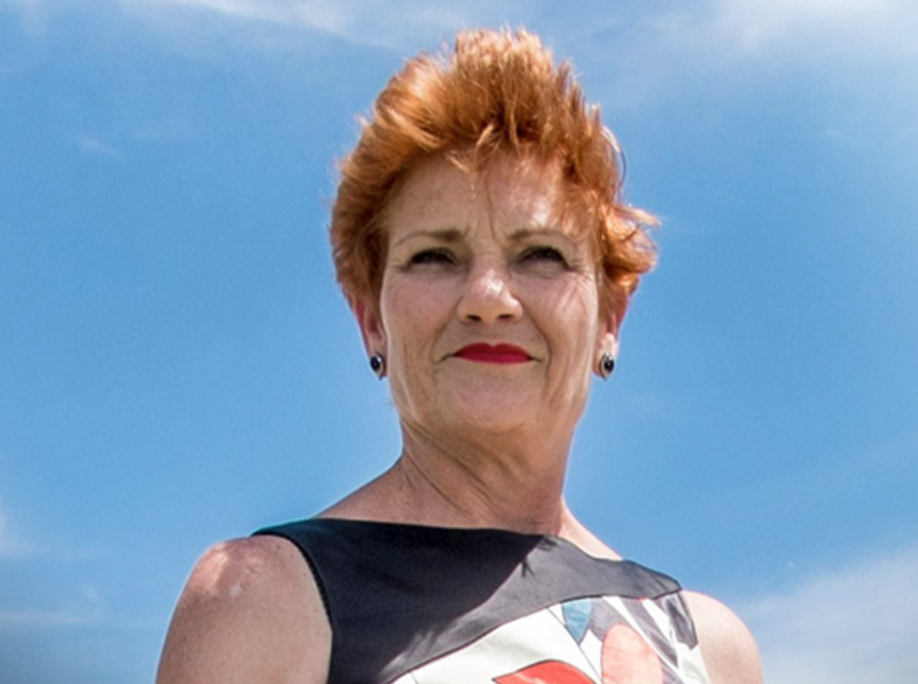
One Nation leader Pauline Hanson and fellow traveller Barnaby Joyce certainly did not let the crisis go to waste.
Perhaps uniquely in the history of post-war two-party politics in the English-speaking world a shattering event or crisis the size of Bondi has been so badly handled by both sides that neither got a boost.
Usually, a floundering head of government rises to the occasion and leads on the victory at the polls: Margaret Thatcher and the Falklands; and George W Bush and 9/11.
Or they make a mess of it and the Opposition thunders home: Spanish train bombing 2004.
Here, Opposition leader Sussan Ley has performed only marginally less worse than Albanese (pardon the grammar).
Perhaps the capitacide (removing the leader) that has dominated Australian politics in the past 20 years has resulted in no-one left with the leadership skills to read events and voters’ reaction to them.
It has certainly left a culture in both major parties that the leader must constantly be looking over their shoulder at threats from their own tribe rather than looking at how the nation, as a whole, will judge their actions.
Albanese clearly has had to placate a significant pro-Palestine element within his caucus as well as members with large Muslim minorities in their electorates.
It prevented him from not letting the crisis go to waste.
He could have immediately used the moment to deal with hate speech more generally – against racial attributes and sexual orientation.
The same forces probably made him suggest that citing religious texts should be exempted from hate-speech prohibitions – missing the obvious point that it is precisely those texts which contain exhortations to violence and hatred against outsiders.
Ley has had to placate the culture warriors in her own party who have championed freedom of speech over limitations against vilification.
It has led her to resorting to knee-jerkism with resulting inconsistency.
On December 18 she called on the “Prime Minister to immediately recall parliament to pass urgent legislation to eradicate antisemitism and strengthen Australia’s counter-terrorism laws following the Bondi Massacre”.
But in the lead-up to this week’s parliamentary sitting, to do exactly that, she has said it is too rushed and that two days is not enough.
She is right about that, but it only highlights her political opportunism on December 18.
Presenting rushed legislation as a take-it-or-leave-it package will never succeed, given the composition of the Senate.
Albanese did well to separate the hate-speech part from the guns part.
He will get Greens support on guns.
After all, it was guns that killed people at Bondi.
Separating the elements makes sense.
With guns, the legislation can be straightforward – defining the specification of guns that can be owned; how they are to be kept; and who can keep them.
It would be fairly straightforward to prosecute.
Hate speech is qualitatively different and full of nuance and complicated facts.
It is similar to defamation.
And across the past few years we have seen many prolonged and expensive cases about the meaning and effect of published words.
Law-reform commissions and parliamentary committees have spent unquantifiable hours getting the balance right.
And prosecutions create martyrs and badges of “honour”.
Crafting laws on this will take care and time.
In the meantime, opinion polling since Bondi should be alarming for both major parties.
Four opinion polls since the Bondi attack on December 14 have put the One Nation vote at between 15 and 21 per cent.
The most recent at 18 per cent was three times its vote at last year’s election.
Further, the latest Resolve poll has the combined vote for minor parties and independents at 42 per cent – the highest since polling began.
That vote will likely fall as an election approaches, but it carries the potential for a transformative shift in Australian politics.
Last election, minors and independents got 33.6 per cent of the vote and just six per cent of the seats.
But once they push towards 40 per cent, it means that in many seats they will come second and win the seat with the preferences of the major party below them.
Over that threshold the minors and independents might more than double their number of seats.
It would mean the governing party would not have a majority in either the Representatives or the Senate, and a combination of the Opposition and minor parties and independents could start legislating.
The hate speech and gun legislation before the parliament now would be a classic case.
At present if the Government does not agree, there is no legislation.
Under minority government, legislation that the Government did not like would pass.
The Government would have to live with it or go to an election – which could be suicidal at worst, or inconclusive at best.
Why has One Nation soared?
The answer lies in immigration.
Recent polling says that two-thirds of the population overall want fewer or a lot fewer migrants – citing pressures on housing and government services.
Yet the Government is ignoring them, and the Opposition (still beholden to business wanting cheap labour) is only making vague statements.
Hanson has been unequivocal in calls for lower immigration.
A huge 94 per cent of her supporters want fewer migrants – 84 per cent of those want “a lot fewer”.
She has not wasted a crisis, she is tapping into the frustration of two-thirds of the population, and it is working.
The trouble is that Hanson’s formula is one of bigotry and opportunism.
The job for Albanese now is to concern himself less with the Coalition (which is doing a good self-demolition job all on its own) and concentrate on reversing the One Nation surge.
He can best do that by dealing with the obvious community disquiet about high immigration.
This article first appeared in The Canberra Times and other Australian media on January 20.
*Crispin Hull is a distinguished journalist and former editor of the Canberra Times. In semi-retirement, he and his wife live in Port Douglas, and he contributes his weekly column to Newsport pro bono.
- The opinions and views in this column are those of the author and author only and do not reflect the Newsport editor or staff.