Kempton reserved on ARNI unit deployment
Disaster Resilience



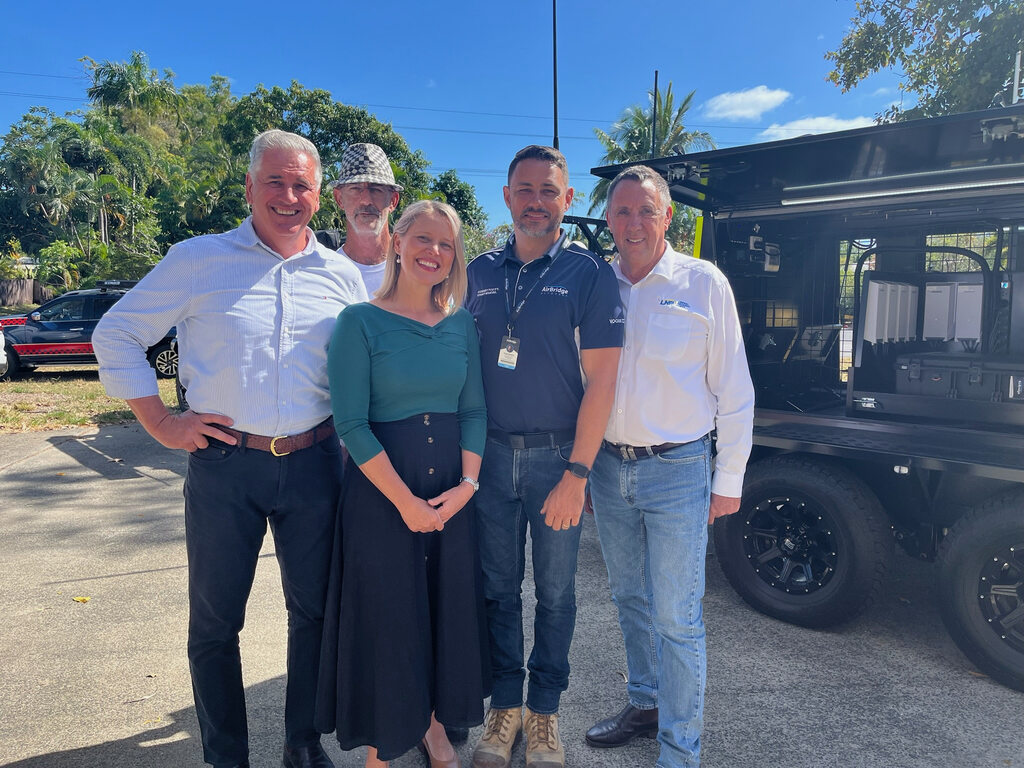
The location of emergency communication Airbridge Resilient Network Infrastructure trailers in the Douglas region remains unknown despite a pre-election promise made by Cook MP David Kempton more than a year ago.
Two years after the devastation of Tropical Cyclone Jasper on the area, and a year after Mr Kempton won the seat of Cook, having promised to deliver the hi-tech trailers to bolster disaster readiness, his office yesterday issued a statement to Newsport.
"David Kempton, the Member for Cook, is a big supporter of the ARNI emergency communication system, having seen a need for alternate telecommunication and internet systems post Jasper," the statement read.
"In that critical period during and after a natural disaster, when mainstream communication and power often fail, the ARNI systems will bridge the gap.
"The ARNIs have started to roll out and will continue on an as-needed basis."
In August, Mr Kempton said Douglas Shire could expect to have up to half of the first distribution of state-of-the-art ARNI emergency communications units promised by the LNP pre-election.
At the time, he indicated up to four of the 10 mobile AirBridge Resilient Network Infrastructure units, which use satellite technology to enable emergency services and community to maintain connectivity when phones, power, and internet goes down during, and after, natural disasters, strategically located between Ellis Beach and Cape Tribulation.
“We promised 10 of these things and we are now looking strategically at where they should be placed for the best coverage,’’ Mr Kempton said.
Confirming the $1.5m investment in the units had been signed off in the State Budget, work was being ramped up to ensure the network had the invaluable added defence in time for wet season.
“Where these units are placed will be crucial, as is how they are administered,’’ Mr Kempton said.
“That will be done by either local disaster management groups or councils.
“There will be units in place for this coming wet season and there might be three or four between Ellis Beach and Cape Tribulation, is what the indication is.’’
But last month, in a media statement, the Government said it was delivering on a key election commitment with only two new satellite-powered ARNI communication trailers rolled out to bolster disaster readiness across Far North Queensland.
The units allow responders to re-establish communication hubs during cyclones, flooding, or severe weather events.
Police and Emergency Services Minister Dan Purdie said the rollout was a clear sign the Government was getting on with the job of fixing years of Labor neglect in disaster communication capability.
“For too long, remote Queensland communities were left without the basic communications they needed because Labor simply didn’t prioritise them, but the Crisafulli Government is changing that,” Minister Purdie said.
“These new ARNI units mean SES volunteers can restore essential communications within minutes when a cyclone or flood cuts a community off.
“This is exactly the kind of practical, frontline support Queenslanders expect, and it’s what we’re delivering.
“We promised to strengthen disaster communications in the State’s most vulnerable areas, and today’s delivery shows we’re keeping that promise.”
Deputy Commissioner of Disaster and Emergency Management Chris Stream said the units provided the SES with the ability to restore core communication to residents, responders and local leaders during times of emergency.
“The equipment is designed to be towed directly into an isolated area and activated quickly, which is essential in communities impacted by weather events,” Deputy Commissioner Stream said.
SES Far Northern regional director Wayne Coutts said allocating the trailers to the Far Northern SES ensured they could be deployed rapidly when and where Queenslanders needed them most.
“We live in a time when remote and regional communities rely heavily on mobile networks to receive information, contact critical service providers and check in with friends and family during weather events,” Mr Coutts said.
“If traditional networks fail during a cyclone or flood it is vital that information continues to reach the community as well as to our volunteers coordinating a response at the frontline.
“If traditional communication options go offline during a disaster, these units give us a vital alternative to ensure regional Queenslanders can receive the help they need.
“This project demonstrated strong cooperation between the QPS and SES to ensure Queenslanders in regional and remote communities were able to stay connected when it counts.”
Support public interest journalism
Help us to continue covering local stories that matter. Please consider supporting below.