A war by everything but its name
CRISPIN HULL COLUMN



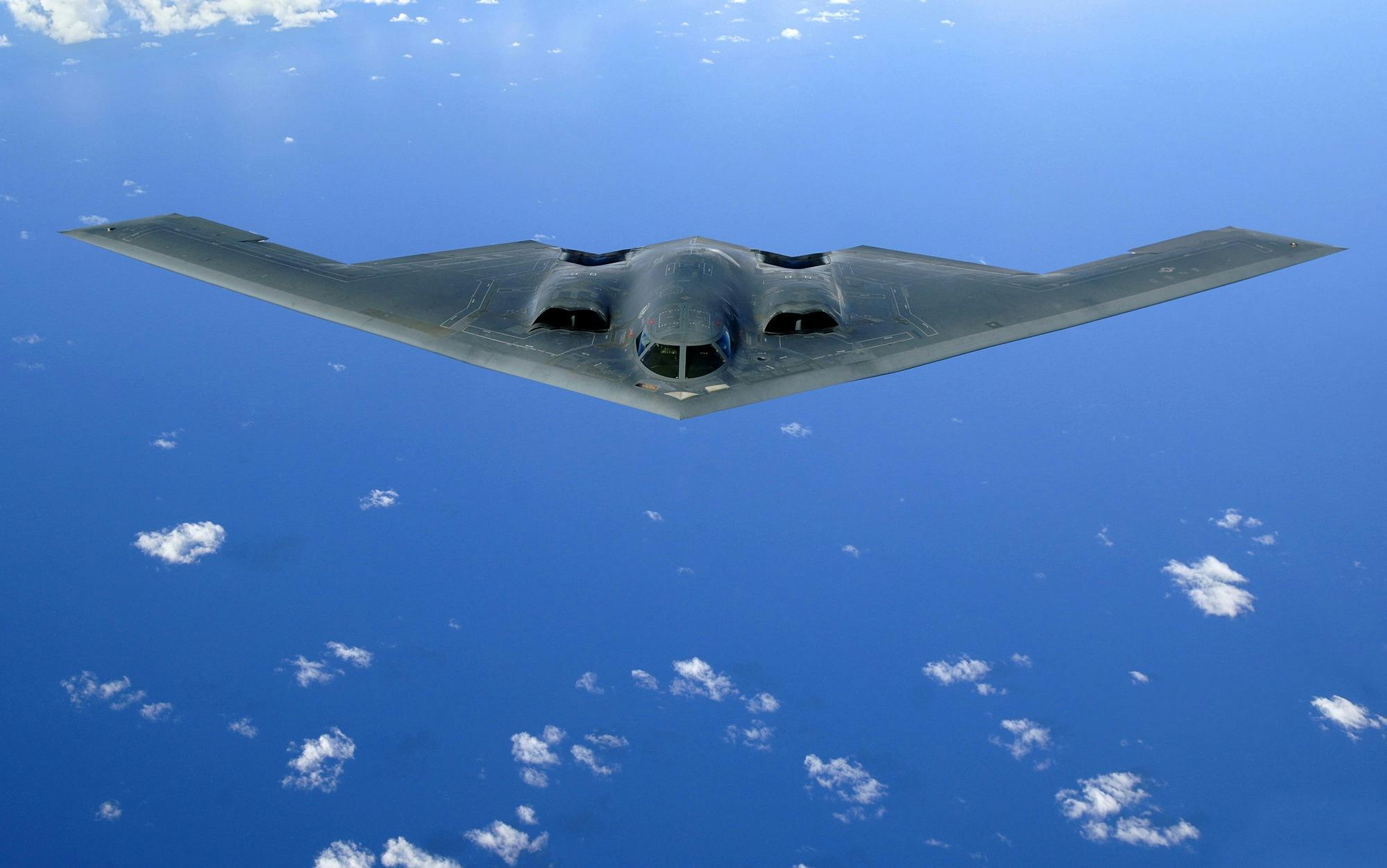
A war by any other name would still be the cause of as much misery, to reapply the Shakespearean quote.
The two so-similar autocrats, Russian President Vladimir Putin and US President Donald Trump, do not like the word “war”. (And there is a lesson in this for Australia.)
For them, the invasion and killing of combatants and civilians and destroying buildings is not “war”. Putin pretends his “special military operation” is to protect Russians in what he sees as Russian territory. The Trump regime has called its war “a pre-emptive strike” and a “proactive defensive action”.
This is because the US Constitution provides “Congress shall have power . . . to declare war”.
An autocrat who does not want any fetter on his power just takes the Orwellian route of language abuse and concludes that an attack in a “proactive defensive action” without declaring war does not breach the Constitution.
The first draft of the Constitution gave Congress the power to “make war”, as distinct from just declaring it, but it was changed by the framers to permit the President to take emergency action to defend the US against a sudden invasion.
Trump and his Secretary of State, Marco Rubio, have characterised the air attack on Iran to eradicate its nuclear-weapons program (that they had said eight months earlier had been obliterated) as an emergency defensive action.
Three years ago, a joint standing committee of the Australian Parliament delivered a report on its Inquiry into International Armed Conflict Decision Making.
It recommended greater reporting to Parliament on the deployment of Australian troops overseas, but nothing much has changed.
If the Coalition was in power, it is a fair bet that the Navy and Air Force personnel would have been sent to Trump’s war and that the decision would have been made in secret – just like Australia’s disastrous decisions to involve ourselves in Iraq and Afghanistan.
But an island nation like Australia does not have to send ships, aircraft, and combatants overseas in our defence, or at least not urgently.
Many nations have a requirement of parliamentary approval for overseas deployment. Some allow for post-hoc approval after a certain time, and if that approval is not given, the troops have to come home. Such a process would have saved Australia a lot of agony in Vietnam, Afghanistan, and Iraq.
In a dissenting report, the Greens recommended that both Houses or a joint sitting approve overseas deployments. It also sought the tabling of the legal advice given to the Howard Government about going into Iraq.
In general, the whole process of going to war should be opened up.
The Greens noted the irony that Australian engagement in Iraq and Afghanistan stemmed from the approval of the representatives of the American people, but not ours.
Since the Iran action, of course, US congressional approval can be dispensed with under the autocratic thinking that air attacks and even invasion could be treated as defence.
In light of what has happened in Iran, the end to the secrecy in Australia is more urgent than ever. And so is a reassessment of our alliance with the US.
Australia should join Canada and give up the pretence that the rules-based international order is still intact or easily resurrected and give up the supplication to imperial powers like China and the US. Instead, genuine rule-of-law liberal democracies should co-operate with each other.
Canadian Prime Minister Mark Karney called the ad-hoc coalitions “variable geometry”.
Australia should go further.
In February 2025, a month after Trump began his second term, I wrote in this column: “Australia can now either grimace and bear it for four years pretending nothing has happened, or face reality and question whether AUKUS and the US alliance more generally are worth it. . . .
“The acid question now is: to what extent are Trump's values American values? Can they be separated as if there is a separate pocket of American values – the rule of law, the separation of powers, freedom of the press, international order, liberal democracy and its spread throughout the world, and the helping hand to people and countries less fortunate? It is difficult to see how.”
And the following month, I wrote: “As Trump’s actions get more and more disruptive, the rule-of-law nations should cut the US out and indeed form a new rule-of-law alliance.”
Karney is right, there is no need to be supplicant to the US. The rule-of-law nations – the EU, Britain, Japan, Australia and others – have a combined GDP equivalent to that of the US. We can act without the US and not be bullied by it.
This is not really a contest between autocracy and rule-of-law democracy. Quite a few autocrats stay within their boundaries. Rather it is a contest between imperialists and democracies.
Imperialists want to subjugate others and their lands and bring them into their empire. China under Xi and before, Russia under Putin, and the US under Trump think like that. So, indeed, to some extent does Iran. They ignore linguistic, ethnic, cultural, and religious identity in pursuit of power and wealth.
Yes, Iran has been pursuing nuclear weapons. Yes, its regime is a flagrant and persistent abusers of human rights, but military force will not change that; it will only make it worse.
It seems unlikely that the US will be able to obliterate Iran’s nuclear program; find all the enriched uranium; and effect regime change all from the air. It would be nice to be wrong. But when this venture inevitably fails, the world will have to return to something like the Obama-negotiated 2015 Joint Comprehensive Plan of Action if the nuclear nightmare or other horror is to be avoided.
The US has underestimated the hell that asymmetric warfare can unleash. A few drones on some US bases and energy plants around the gulf are one thing. Imagine if they struck the desalination plants upon which millions of people in the Middle East rely upon for drinking water and who would soon die of thirst without them.
The quicker rule-of-law countries demonstrate the good sense of diplomacy and the madness of war the better.
This article first appeared in The Canberra Times and other Australian media on 10 March 2026.
*Crispin Hull is a distinguished journalist and former Editor of the Canberra Times. In semi-retirement, he and his wife live in Port Douglas, and he contributes his weekly column to Newsport pro bono.
- The opinions and views in this column are those of the author and author only and do not reflect the Newsport editor or staff.